Thai Hai ethnic village turns cultural heritage into sustainable tourism
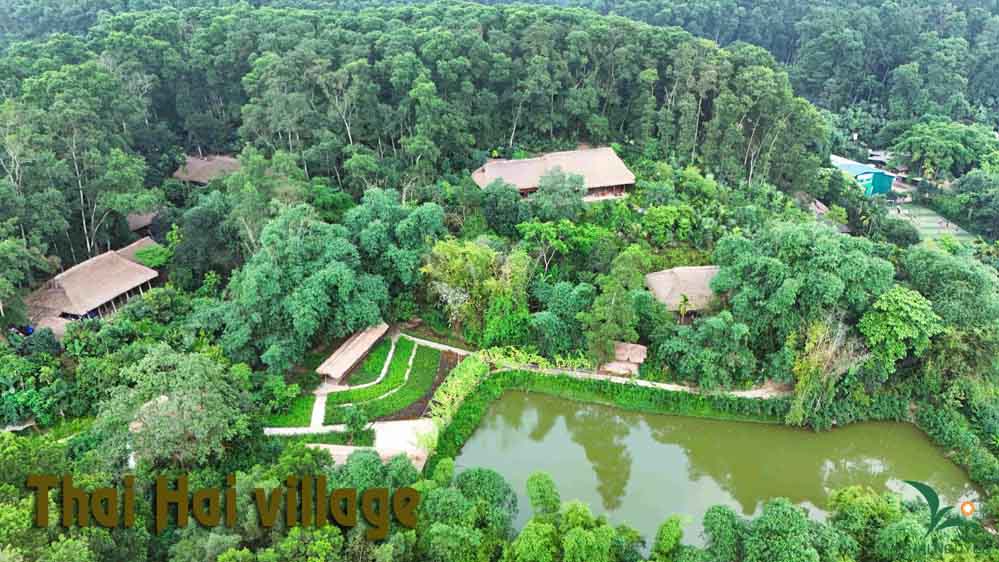
Nestled amidst the lush greenery of the Tan Cuong
tea-growing region in Thai Nguyen, the Thai Hai Ethnic Village Ecological
Conservation Area creates a unique destination: where Tay culture, traditional
stilt houses, agricultural production, ecology, and community tourism are all
interconnected within a unified space. In 2022, Thai Hai was recognized by the
World Tourism Organization (UNWTO, now UN Tourism) as one of the 32 "Best
Tourist Villages in the World", becoming the only representative from Vietnam on
that list.
Preserving the soul of the Tay village amidst a green space
The first thing that impresses visitors to Thai Hai is not the modern buildings,
but the system of traditional stilt houses nestled amidst greenery, hills, and
water. According to UN Tourism, the village has about 20 hectares of green
forest space with more than 30 traditional stilt houses. This is where the Tay
ethnic community has lived together for generations, preserving their language,
customs, rituals, costumes, and traditional cultural values.
Each stilt house in Thai Hai is not simply a tourist attraction; it's an
integral part of community life. Visitors can step into the living space of the
Tay people, enjoy traditional food, learn about handicrafts, participate in
agricultural activities, and experience local life. This unique approach sets
Thai Hai apart from newly built resorts. Here, cultural life is part of the
tourism product , and the local people are not detached from tourism but
directly participate in creating experiences for visitors.
UN Tourism evaluated Thai Hai based on its cultural and natural values,
community tourism, sustainable development, and ability to utilize indigenous
values ??to create unique tourism products. The "Best Tourism Villages" program
was established to recognize rural areas that know how to develop tourism while
simultaneously protecting the landscape, culture, local knowledge, and
developing livelihoods for the community.
Tourism begins with conservation
In Thai Hai, preservation is inseparable from development. The stilt houses,
language, clothing, food, customs, and community life all become valuable
"resources" when properly preserved. Notably, the local people don't just
showcase their culture to tourists; they continue to live within that cultural
space. Festivals, rituals, traditional crafts, production activities, and
cuisine are maintained in daily life and then offered to visitors for shared
experience.
UN Tourism notes that Thai Hai organizes traditional spiritual festivals and
employs people knowledgeable in local culture and language to guide tourists.
Traditional stilt houses are also maintained and used as accommodation, allowing
visitors to learn more about Tay cuisine, agricultural production, livestock
farming, and handicrafts. This is a key aspect of community-based tourism:
visitors connect with a living community, not just visit a model built to serve
tourists.
From agriculture to tourism products
Another unique feature of Thai Hai is the combination of tourism and
agricultural production. According to UN Tourism, the village applies the VAC
model - garden, pond, livestock - in its production organization. This approach
not only creates a local food source but also gives tourists the opportunity to
observe and participate in traditional agricultural production activities.
From an ecological area, Thai Hai has developed a relatively complete range of
experiences: visiting stilt houses, learning about Tay culture, staying in
homestays, enjoying local cuisine, experiencing agricultural production,
exploring the landscape, and participating in community activities. This is also
a direction that aligns with the trend of green tourism. Instead of exploiting
resources extensively, the Thai Hai model focuses on increasing the value of
what the locality already possesses. Greenery, stilt houses, culture, cuisine,
agriculture, and people are connected into a unified product.
In the context of many rural areas facing urbanization pressures, preserving
ecological spaces and traditional culture is even more significant. Tourism, if
properly organized, can become a driving force to help communities generate
additional livelihoods, while also providing an economic justification for
preserving inherent values.
Thai Nguyen 's international mark
In 2022, UN Tourism announced the list of "Best Tourism Villages" for 2022. Thai
Hai was among 32 villages selected from 136 applications from 57 member
countries. This is an international program aimed at developing rural tourism
linked to cultural and landscape preservation, job creation, and income
improvement for communities.
Therefore, the title "Best Tourism Village in the World" should be correctly
understood as a title from the UN Tourism's Best Tourism Villages program, not a
ranking in which Thai Hai is ranked number one. In 2022, 32 villages in 22
countries were recognized.
To date, Thai Hai remains one of the bright spots in Vietnam's community-based
tourism. According to the Thai Nguyen Provincial Electronic Information Portal,
in January 2025, the product "Tay Ethnic Culture Tourism, Thai Hai Village" was
recognized as a 5-star national OCOP product; the conservation area also
received the ASEAN Homestay Award. These recognitions show that the value of
Thai Hai lies not only in an international title awarded in 2022, but also in
the process of maintaining and upgrading tourism products based on community
culture.
A destination for green tourism
In the current context of tourism development, Thai Hai suggests a noteworthy
approach: it's not necessary to build many new structures to attract tourists.
An ancient stilt house, a traditional dish, a garden, a cultural story, or a
community activity, if preserved and organized into suitable products, can all
create value.
That is also why Thai Hai aligns with the principles of the Best Tourism
Villages program: economic development while simultaneously caring for society ,
the environment, culture, and sustainable development goals. UN Tourism
identifies this program as contributing to reducing rural development
disparities, creating jobs and income, protecting resources, reducing waste,
promoting innovation, digital transformation, and enhancing community capacity.
From a mountainous region of Thai Nguyen, Thai Hai has brought the story of
stilt houses and Tay culture to domestic and international tourists. The
greatest value of the model perhaps lies in transforming seemingly ordinary
aspects of life into cultural, ecological, and economic assets.
In the context of Vietnam's green tourism landscape, Thai Hai is more than just
a tourist destination. It's also a story about how a community preserves the
memories of its village, conserves its living space, and creates livelihoods
from its indigenous values. Following its title as "World's Best Tourist
Village" in 2022, the challenge for Thai Hai is to continue maintaining its
original character during its development, so that each visitor, upon leaving,
remembers not only a beautiful tourist spot but also a Tay cultural space that
is being lived, preserved, and continued.
As a local tour company in Vietnam,
Footprint Travel is all about
delivering value - our services are booked in the most cost-effective way,
ensuring you get the best value for your money. We offer exceptionally good
value, while never cutting corners or sacrificing quality.
Vietnam Travel Information
Customize your trip

Testimonials
Dear Ms Helen Pham
We had a wonderful amazing trip and will return as soon as we can afford it again. Thank you so much! I will write a great review on tripadvisor. Really the guides and hotels and tours were awesome. Ms. Nhung was very sweet and refreshingly honest, very likeable. Mr. Tam was fantastic, highly knowledgeable and funny. Probably our best "tour" was the day we spent on motor bikes visiting the tombs near Hue. The bikes allow for a much more intimate view of the countryside. And then - as I wrote - Mr. An was absolutely the best guide ever...Read more
- Vietnam Tours |
- Vietnam Hotels |
- Testimonials |
- Terms of Service |
- Travel News |
- Travel Blog |
- Photo Gallery
Email: contact@footprintvietnamtravel.com
Address: 16/5 Trai Alley, Dong Anh dist., Hanoi, Vietnam
Tel: (+84) 912 320 266
Copyright © 2010. FOOTPRINTVIETNAMTRAVEL.COM - All Rights Reserved.
